
Could a Data Center Pay Nassau Back? The Tax Case Needs Real Numbers.
A county committee sees a possible tax-base gain and lower-water cooling options. Before anyone calls that a win, Nassau needs project-level revenue, utility and infrastructure figures.
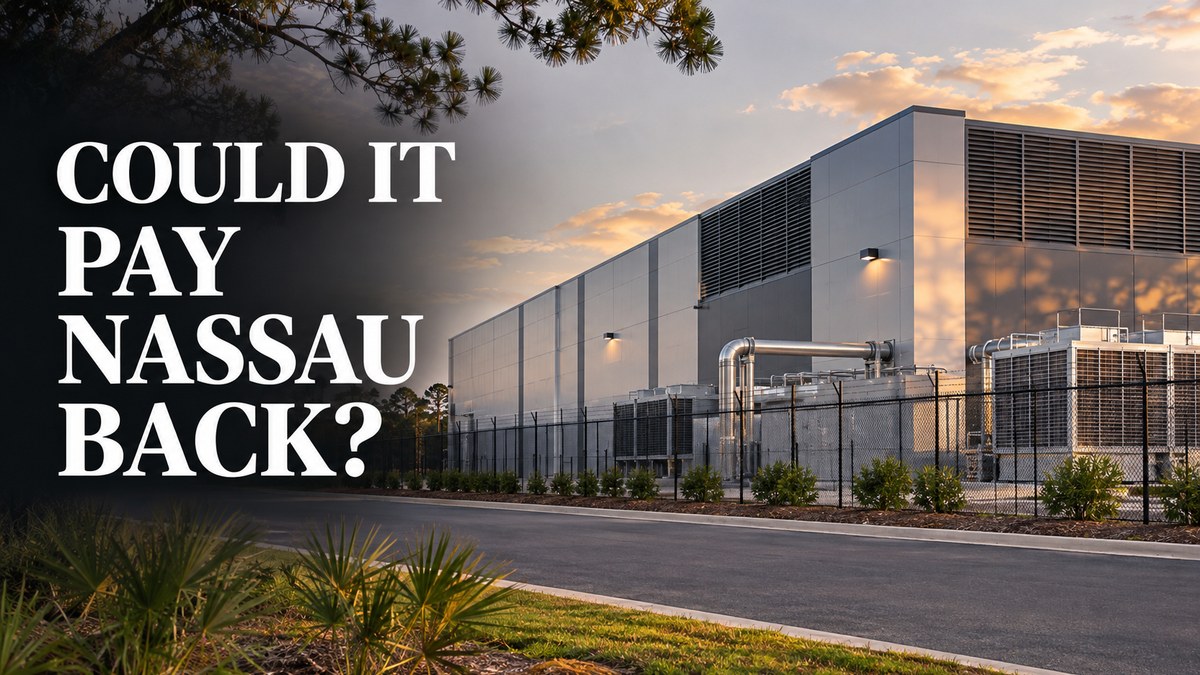
A data center could add taxable value to Nassau County, but the net benefit depends on the actual project, exemptions, service costs and who pays for electricity, water and public infrastructure. No Nassau-specific revenue estimate is established in the county's draft report.
Analysis: The case for considering a data center is stronger than a simple promise of jobs. Nassau County's October 21 fact-finding draft says large private investment can expand the tax base and that property-tax revenue can be significant when a project is properly sited and regulated. It also warns that permanent jobs may be relatively limited, and that utility, transportation and public-safety costs can reduce the net gain. Those are findings about potential outcomes, not a forecast for a proposed Nassau facility.
The upside that deserves a calculation
A substantial commercial property might generate tax revenue that can support local services. The same committee draft, at pages 39–40 and 55–56, says local fiscal benefits vary by community, tax structure and incentives. Its examples from other states do not give Nassau a dollar figure. Any local claim about annual revenue should start with a named site's assessed value, applicable tax rates, exemptions and the portion of taxes received by each public body.
The committee also proposed excluding data centers from county economic-development grants and county property-tax incentives. As our earlier report explained, that is a proposal, not an adopted rule. If adopted, it could help preserve more of a future project's county tax benefit; it would not by itself prove that the project pays its full public cost.
Lower-water is possible. Zero-water is not established.
The report says closed-loop, direct-liquid and immersion cooling can substantially reduce water consumption. It also says water demand varies by facility design, technology, climate and operation, and that a lower-water design may need more electricity. A closed-loop system does not necessarily eliminate discharge. Those findings are in the county draft at pages 18, 24 and 52–53. Without a specific cooling plan and water-use estimate, it would be wrong to say a Nassau data center uses no water.
Florida's data-center framework, effective July 1, includes a separate consumptive-use permit process for large-scale facilities and allows regulators to require some reclaimed water. Nassau's committee recommends evaluating expected utility demand and reporting actual water and power use. Those safeguards are relevant precisely because resource use is a real question.
Our view: invite a proposal, demand the receipts
A well-sited project with limited water demand, developer-funded infrastructure and a clear net tax return could be worth considering. That is an editorial judgment, not a finding that any current proposal meets those conditions. Residents should see the complete fiscal estimate and utility commitments before approval: expected property taxes after exemptions, public-service costs, peak electrical demand, projected water withdrawals and discharge, and who pays if roads, power or fire protection must expand.
The county's June 8 moratorium on covered data-center applications remains an adopted action. The committee's October 21 report and related standards are drafts for county consideration. The decision to permit a particular project, its design and its actual tax return have not been established by those documents.
What remains unanswered
- What would a specific Nassau site add to the county, school and other property-tax rolls after exemptions?
- What electricity, water, fire-service and transportation costs would that project create, and who would pay them?
- What enforceable cooling design, water budget and operating reports would accompany an application?
Primary sources
- Nassau County Fact-Finding Committee, Initial Draft Report, October 21, 2026 — tax and jobs pp. 24, 39–40, 55–56; water pp. 18, 24, 52–53; proposed standards pp. 61–63. Checked November 2.
- Nassau County data-centers page — Ordinance 2026-044, approved June 8, and Florida SB 484 summary; checked November 2.
- Nassau County fact-finding committee document hub — draft materials and public process; checked November 2.
This is Amelia Undertow analysis and opinion based on the linked public records. The report's policy recommendations remain drafts. No Nassau project-specific revenue or water-use figure has been verified. We will update this article if county action or a project application supplies those figures. Send a correction.