The $225K Trail Study: Who Approved It, and What Has Actually Been Paid?
Five trail phases are being confused with five feasibility studies. The records show one Phase 5 study contract, an approved ceiling, and a paid-to-date total we could not verify.

The county is about to show residents a preferred route for a missing trail connection. The study authorization is nearly $225,000, while a county budget guide listed a preliminary project estimate above $3 million. The route, land needs, construction price and actual study payments all affect what residents may eventually get for the money.
Who is doing the work? Nassau County's November 10, 2025, official minutes identify GAI Consultants Inc. as the consultant for the Amelia Island Trail Phase 5 feasibility study, under contract CM4024 for Bonnieview Road and Clinch Drive pedestrian improvements. The board approved the contract on its consent agenda and authorized the chair to sign it. The vote was unanimous. The minutes establish approval; they do not, by themselves, prove the date the chair signed or the amount subsequently paid.
Five trail phases, not five feasibility studies
The “Phase 5” label refers to a piece of the trail network. A county trail-contract background document describes the five parts this way:
- Phase 1: the southern island connection from Nassau Sound toward Peters Point.
- Phase 2: the Amelia River-to-Sea Trail along Simmons Road.
- Phase 3: the Amelia Island Parkway Trail, itself built in four segments.
- Phase 4: the Will Hardee, Sadler and South 14th Street connection toward Hickory Street, with a future waterfront extension.
- Phase 5: the connection being studied now between the Parkway trail area and the South 14th Street shared-use path.
That is different from the Phase 5 project sheet's three work stages: feasibility, design and construction. The sheet budgeted $225,000 in FDOT grant money for feasibility and left the design and construction amounts to be determined. A county annual report for fiscal 2022–23 says Nassau executed an FDOT agreement to study the segment; we have not located a signed copy of that agreement to assess its exact obligations.
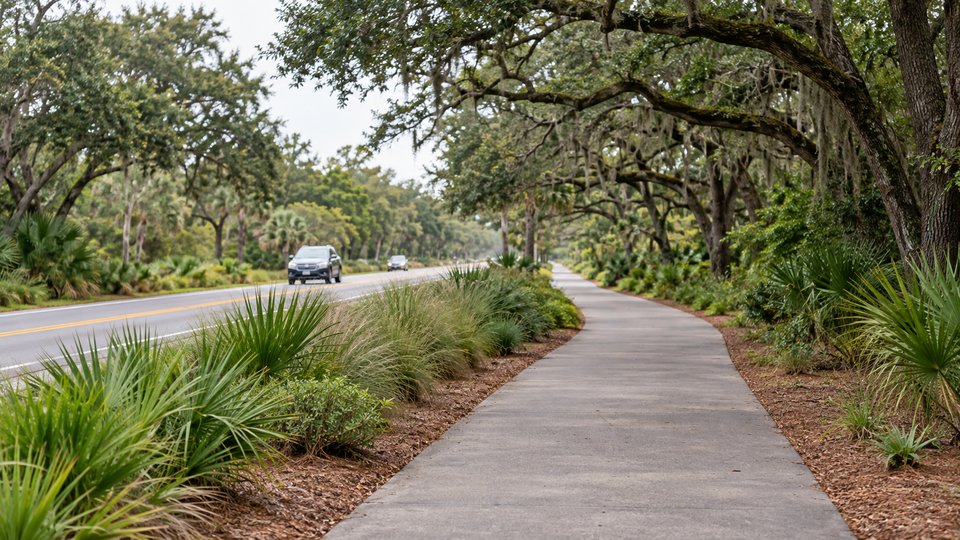
What was authorized, and what has been spent?
The board authorized $224,828.18 for GAI's study in its November 2025 minutes. A later county capital-improvement guidebook lists $225,000 for the Phase 5 study and a preliminary $3,159,883 project estimate that it says must be refined after the study. Those are a contract amount, a study budget and an early total-project estimate, respectively. They are not three bills already paid.
We could not verify a current paid-to-date total for GAI or for all Phase 5 work from the records reviewed. The Nassau County Clerk's Open Finance portal says individual invoice payments can be searched, but no reconciled Phase 5 invoice ledger is cited here. The county should publish the signed CM4024 contract, amendments, invoices, payment totals and study deliverables together so residents can compare price with work received. The older capital guide's expenditure table predates this contract and cannot answer what has been paid since.
Does every trail require a feasibility study?
The records establish a project-specific choice to fund a feasibility and preliminary-engineering stage for Phase 5; they do not establish a universal rule that every trail must undergo five studies. The county project sheet ties design and construction to the feasibility report and route selection. The October 28 county notice says a preferred route will be presented on November 17 and that residents can comment through December 2. Preferred does not mean approved for construction.
Could an AI firm do the work instead?
Analysis: Software could help compare route options, search prior plans, organize comments and prepare cost scenarios. That might reduce some staff or consultant time, but the records here do not show how many hours those tasks account for or what savings are possible. Physical crossings, drainage, right-of-way, accessibility and construction drawings require field evidence and professional accountability. Florida's engineering statute governs who may practice professional engineering. An AI contractor could assist a properly qualified team; replacing the study with unsupervised software output would not establish a safe, buildable route. We found no evidence that GAI's price is inflated, so calling it “bloated” would be opinion, not a verified finding.
What residents can ask next
- Will the county release the signed GAI contract, task-level scope, invoices and deliverables before the November 17 meeting?
- How much of the approved amount has been paid, and what remains?
- What alternatives were compared, and how were safety, land acquisition, drainage and maintenance weighed?
- What share of the study could have been done with existing county data or lower-cost tools?
- What is the current estimate for design, construction and ongoing maintenance?
Residents can ask those questions at the November 17 public meeting. Written comments are due December 2 for inclusion in the meeting record. For the proposed connection and meeting details, see our original Phase 5 report.
Primary sources
- Nassau County commission official minutes, November 10, 2025, consent item E.
- Nassau County Phase 5 project sheet, August 18, 2023.
- Nassau County trail-network phase descriptions in contract background, 2025.
- Nassau County annual report for fiscal 2022–23, published February 29, 2024.
- Nassau County FY2025–2030 capital-improvement guidebook, project CIP000062.
- Nassau County Phase 5 public meeting announcement, October 28, 2026.
- Nassau County Clerk, Open Finance portal, accessed October 30, 2026.
- Florida Statutes § 471.003, engineering practice and exemptions.
Open reporting item: The signed study contract, complete scope, actual invoices and paid-to-date amount were not verified for this report. We will update this article if those records become available.