The fee on a new Nassau County house jumps 48% next April. The AG already called it a tax in disguise.
$7,660.90 today. $11,332.29 on April 1, 2027. It's on a county PDF nobody reads, and it lands on every buyer, not just every builder.
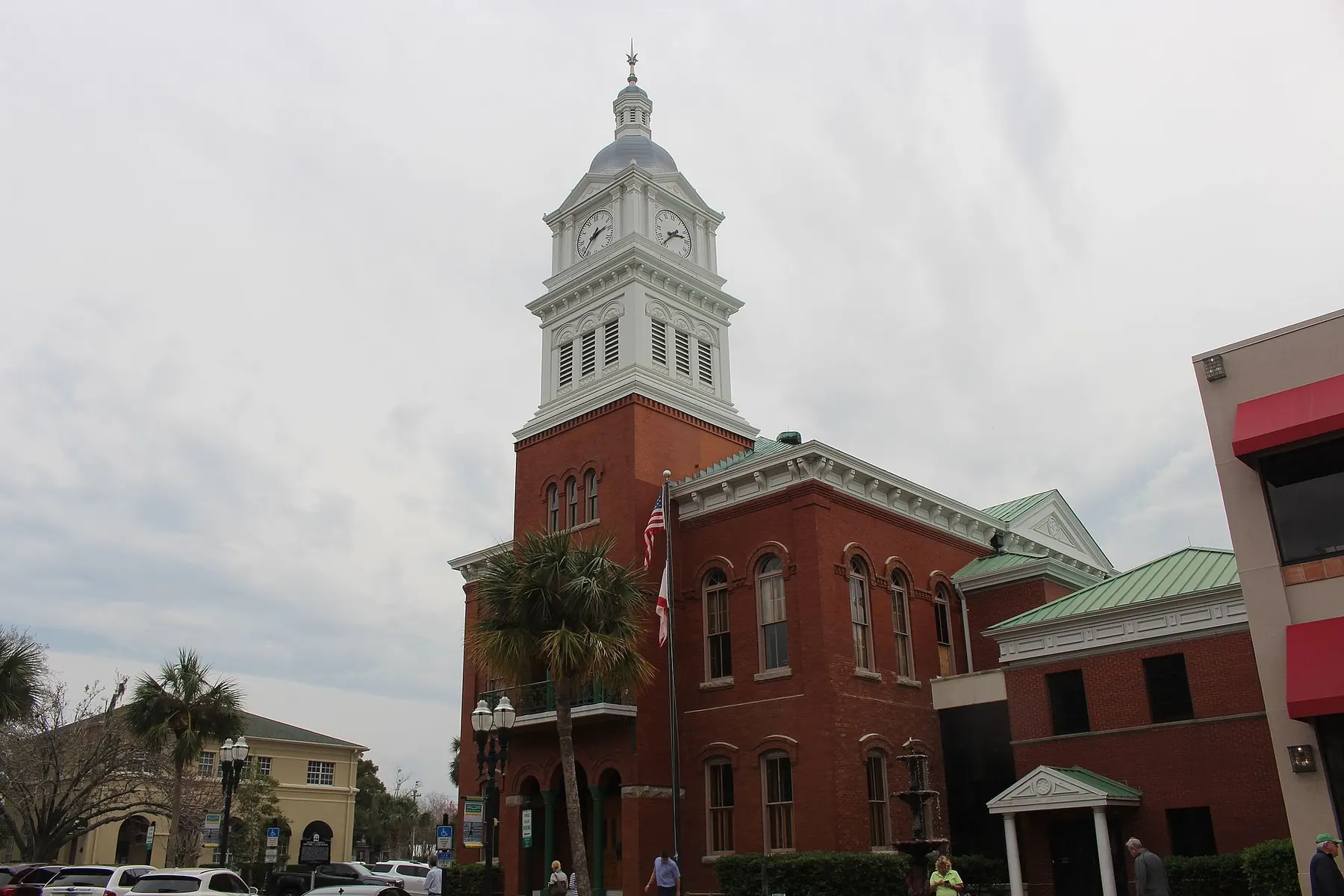
Photo: Michael Rivera, CC BY-SA 4.0, via Wikimedia Commons.
Why nowThe second step of the phase-in takes effect April 1, 2027. Builders have seven months to pull permits at the lower rate.
On December 17, 2025, the Nassau County Board of County Commissioners adopted an updated mobility fee schedule with a two-year phase-in. For a single-family detached home in Zone 1 — the east side of the county, including the island and the SR 200 corridor — the fee is $7,660.90 per unit as of April 1, 2026. On April 1, 2027, it becomes $11,332.29.1
That is a 47.9% increase in twelve months. The west zone goes from $8,215.32 to $11,996.35. The East Nassau planning area goes from $7,352.27 to $10,875.93. A fast-food restaurant with a drive-through goes from $92,160.60 to $124,730.90 per thousand square feet.
The county’s website does not display any of these numbers. The impact-fee page says “Current Impact Fees Effective 04/01/2026” and links to the notice.2
What the Attorney General said
Florida law caps impact-fee increases at 50%, phased over four years, unless a county demonstrates “extraordinary circumstances” through a needs study and adopts the increase by a two-thirds vote.4 Nassau County invoked that exception.
On January 14, 2026, the Florida Attorney General issued Opinion 2026-01 in response. The opinion concludes that a 17% five-year population increase — roughly 3.4% a year — does not constitute extraordinary circumstances under the statute, and adds that an increase approaching 100% “appears to be a tax disguised as an impact fee.”3
The county responded on January 20 with a statement defending its process and its needs study.5
Two things need to be said precisely. First, an Attorney General opinion is advisory; it binds nobody and it is not a court ruling. Second, the opinion addresses the county’s impact fee increase. Nassau’s mobility fee — the transportation charge in the schedule above — is a distinct instrument under a different ordinance, and the opinion does not expressly reach it. Whether the AG’s reasoning would apply to the mobility schedule is a question a court would have to answer, and as of publication no lawsuit has been identified. If one is filed, we’ll report it.
Who actually pays
The fee is paid at permit by the builder. It is not paid by the builder. A $3,671 increase in the cost of producing a house in a market where houses sell goes into the price, into the land, or into the builder’s margin — and the builder’s margin is the last place it goes. For a family buying a $450,000 house in Yulee in 2027, the mobility fee alone is 2.5% of the price, before the separate impact fees for schools, parks, fire, and law enforcement.
Residents tend to hear “impact fee” and think “developer problem.” It is a household-price problem with a developer’s name on the invoice.
What happens next April
When a fee steps up on a known date, permits get pulled before the date. Expect the county’s monthly residential permit counts to spike in the first quarter of 2027 and fall off a cliff in the second. We’re requesting the monthly permit series from the Building Department for January 2026 through June 2027 and will chart it as the data comes in. If the vesting rush is large, it will also tell you something about how many lots are entitled and waiting — a number, incidentally, the county has never published.
The verdict, with the facts above it
The county adopted a 48% one-year increase in the cost of building a home, published it in a PDF the website doesn’t display, and is proceeding with it after the state’s chief legal officer called a closely related increase a disguised tax. Whether it’s legal is for a court. Whether it’s transparent is settled: it isn’t.
Where we could be wrong
Mobility fees exist because growth is supposed to pay for growth, and the alternative to a higher fee is that existing residents fund new roads through millage — which is a subsidy from the person already here to the person moving in. The county's position is that a demonstrated-needs study justifies the increase, and the AG's opinion is advisory, not binding, and addresses the impact-fee ordinance rather than the mobility-fee schedule directly. It's also true that a fee of $11,332 on a home selling for $450,000 is 2.5% of the price; whether that is passed to the buyer, absorbed by the builder, or capitalized into land value depends on market conditions the fee schedule doesn't control. The AG can be right about the statute and the county can be right about the roads.
Confidence levels, sourcing rules, and how we handle errors: Methodology. Spot a mistake? Email corrections — we fix it at the top of the post within 24 hours.
The number nobody else in Nassau County has, in your inbox before the meeting.
Sourced, linked, corrected in public. Unsubscribe with one click; we'd rather have 500 readers who forward it than 5,000 who don't.
We never sell the list. Publisher: Amelia Undertow Media LLC.
Nassau County has 240 nursing home beds. By 2040 it will have 14,454 residents over 80.
for a county whose 80-and-over population is projected to grow 151% by 2040

Fernandina has one of America's oldest tide gauges. Here's the number it has been telling you since 1897.
relative sea level rise at NOAA station 8720030, measured 1897–2025. About nine inches a century.